Same yard, different conditions
The two wall-side Rio Sambas performed better overall than the two near the sidewalk. Sun and irrigation also differ across the garden, so location is a clue to investigate, not an answer by itself.
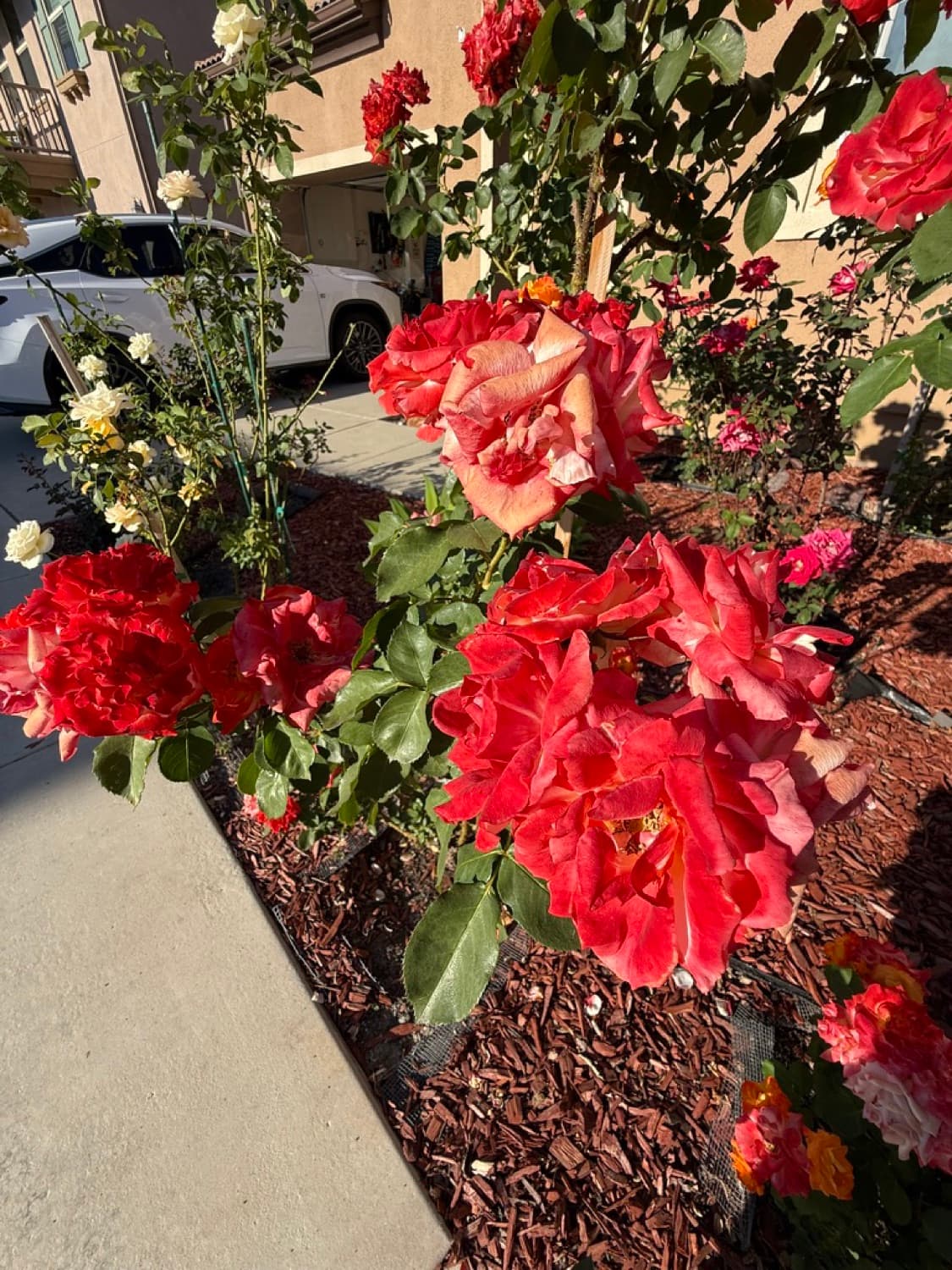
A childhood memory in Iran, four Rio Samba roses in California, and the questions that show up when you pay attention.
A FIELD STUDY IN PROGRESSRead the full report ↗My interest in roses began when I was growing up in Iran. My parents had a large garden around our new home. When I was eight or nine, I was especially fascinated by two roses we called “seven-colored roses.” Their flowers shifted through vivid reds, oranges, and yellows as they matured. I never learned exactly what happened when the plants later developed serious health problems and were removed.
Years later, that memory came back when I chose roses for my own garden. I bought five Rio Samba plants, gave one to my parents, and kept four. Their color reminded me of those roses from Iran, though I can’t identify the childhood plants as the same cultivar.
That became the personal question at the heart of my HORT 162 report: why can roses that look equally promising at first perform so differently?
Photos help me keep track of what changed. They’re records of what I saw, not proof of what caused it.
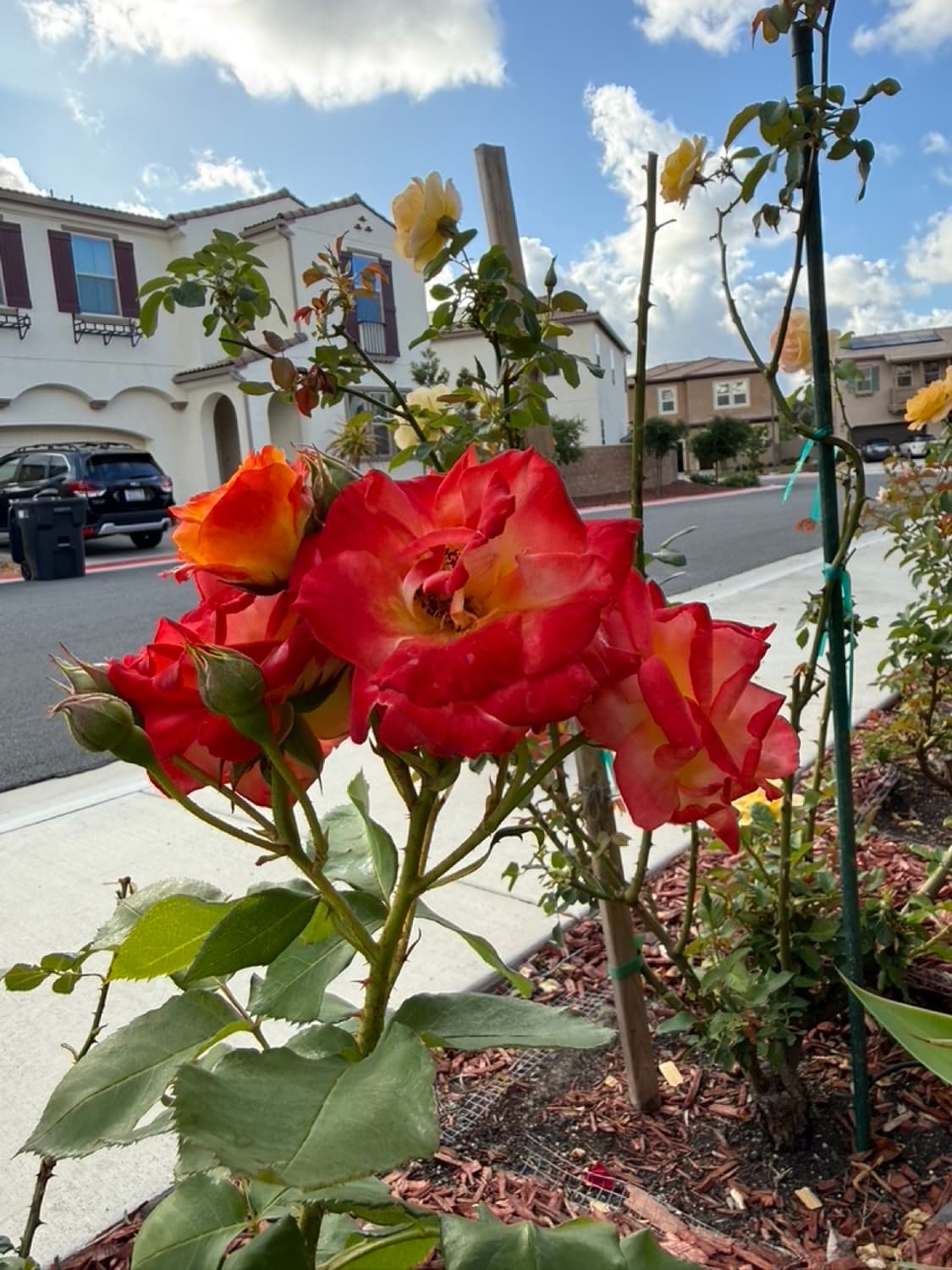
Buds and open flowers, several colors and stages together.
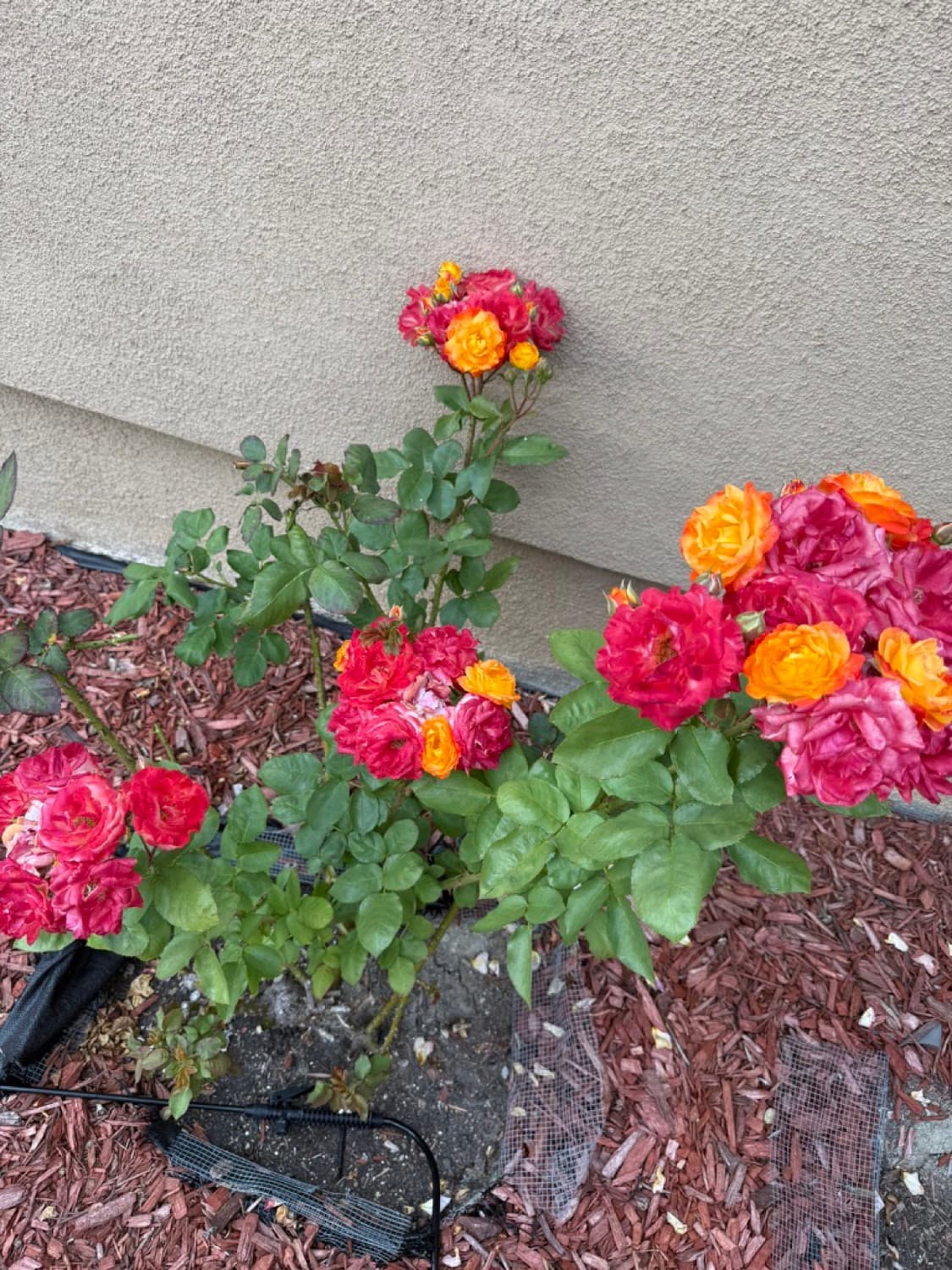
The wall-side plant, one of the stronger performers.
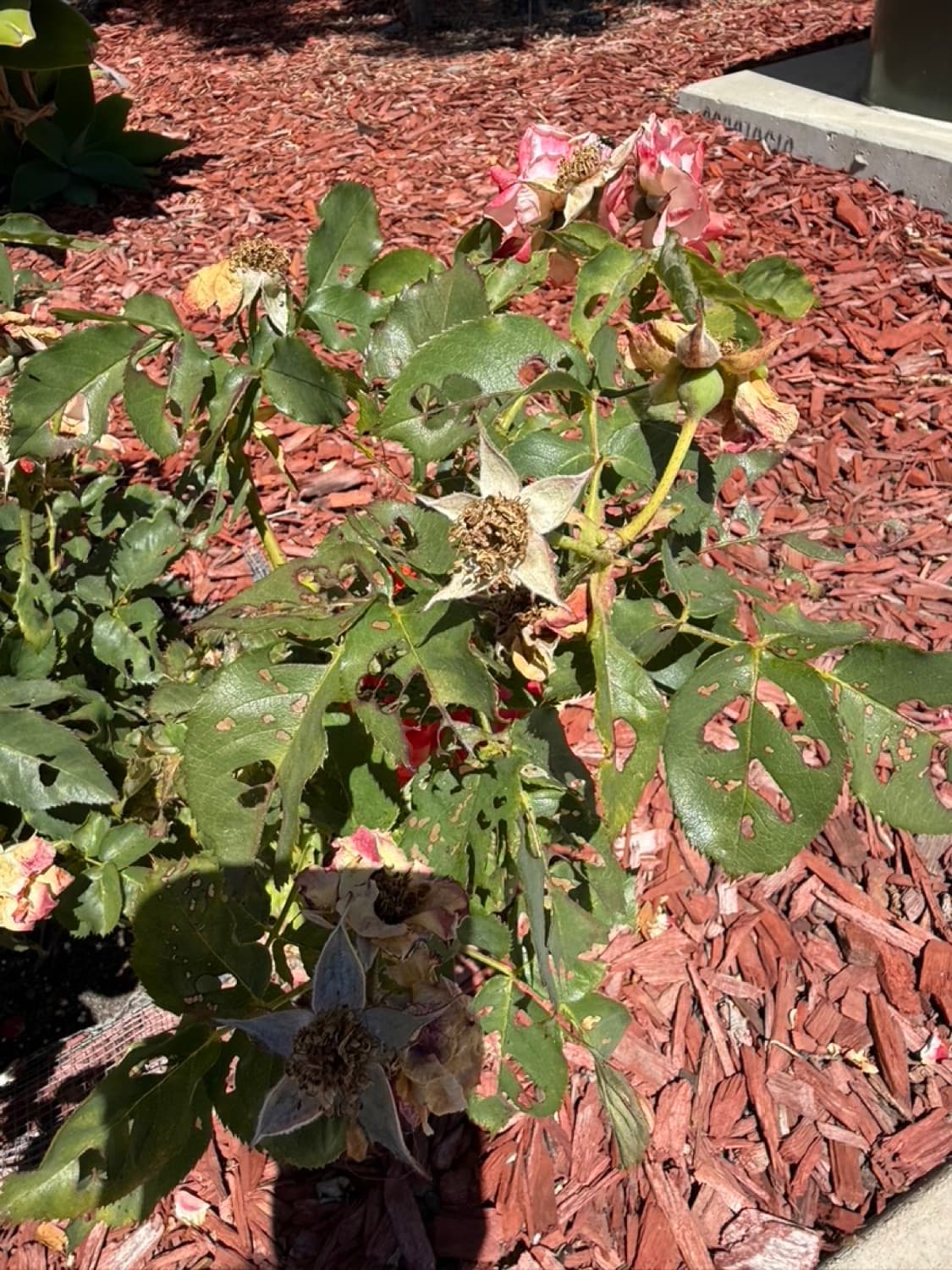
Irregular holes and missing tissue. The photo records damage; it doesn’t identify the cause.
The two wall-side Rio Sambas performed better overall than the two near the sidewalk. Sun and irrigation also differ across the garden, so location is a clue to investigate, not an answer by itself.
June photographs show holes and missing leaf tissue. Sawflies are one possibility in the report, but closer inspection would be needed to identify the cause.
Recording plant location, watering, maintenance, and symptoms should help me ask better questions as I keep learning horticulture.
Read all nine revised sections, with the original figures, tables, and references.
The report is presented as a designed page in this site. It remains a revised draft, and sections 10–12 have not been drafted.